
Description

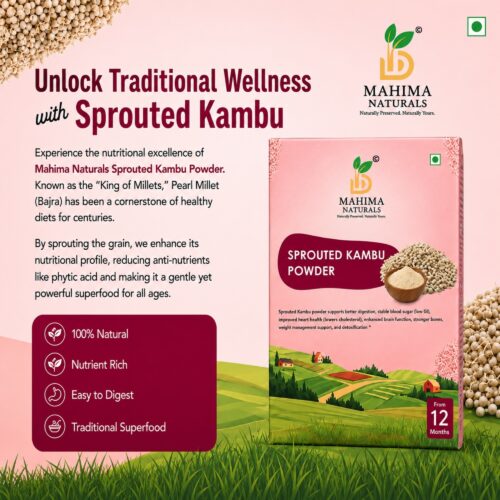
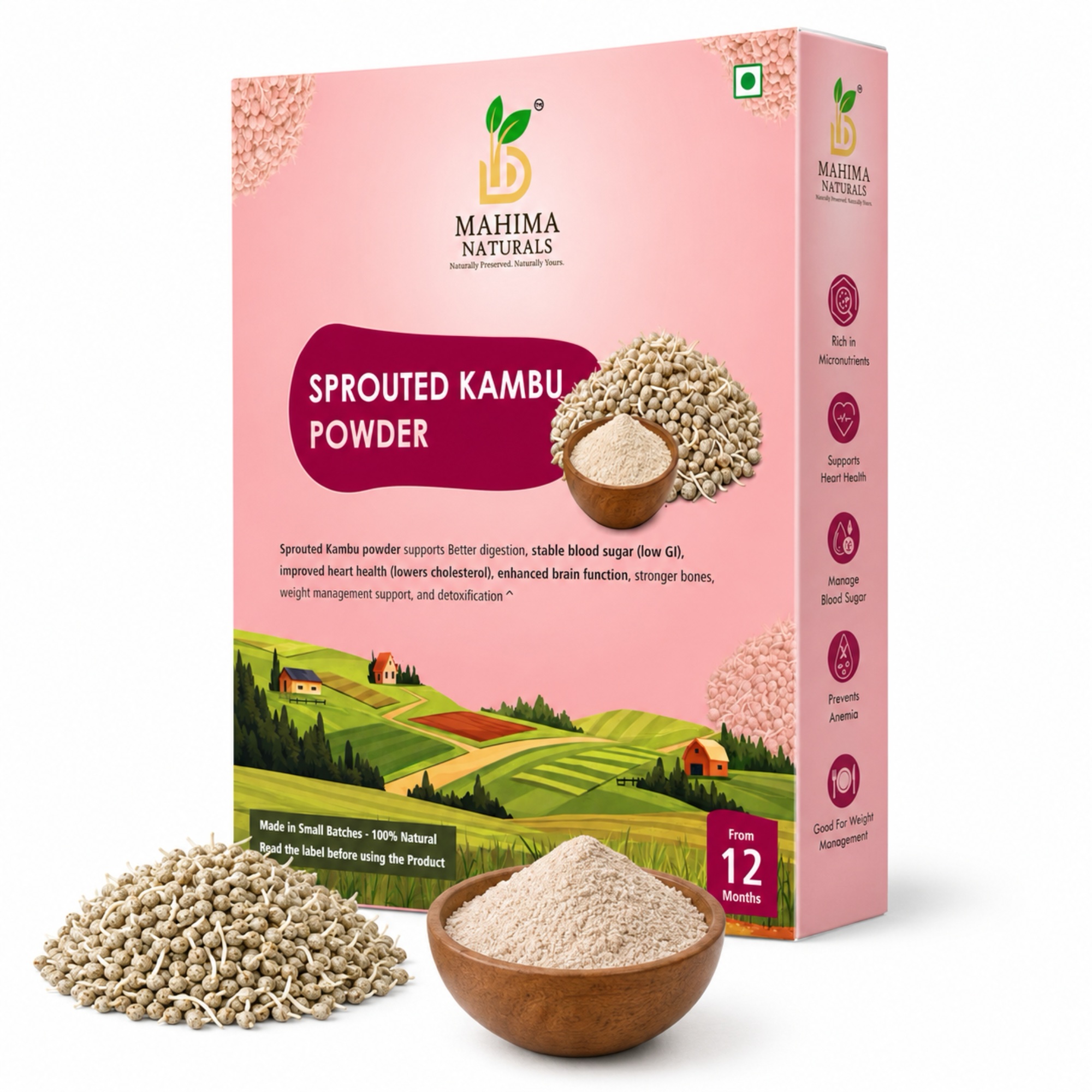
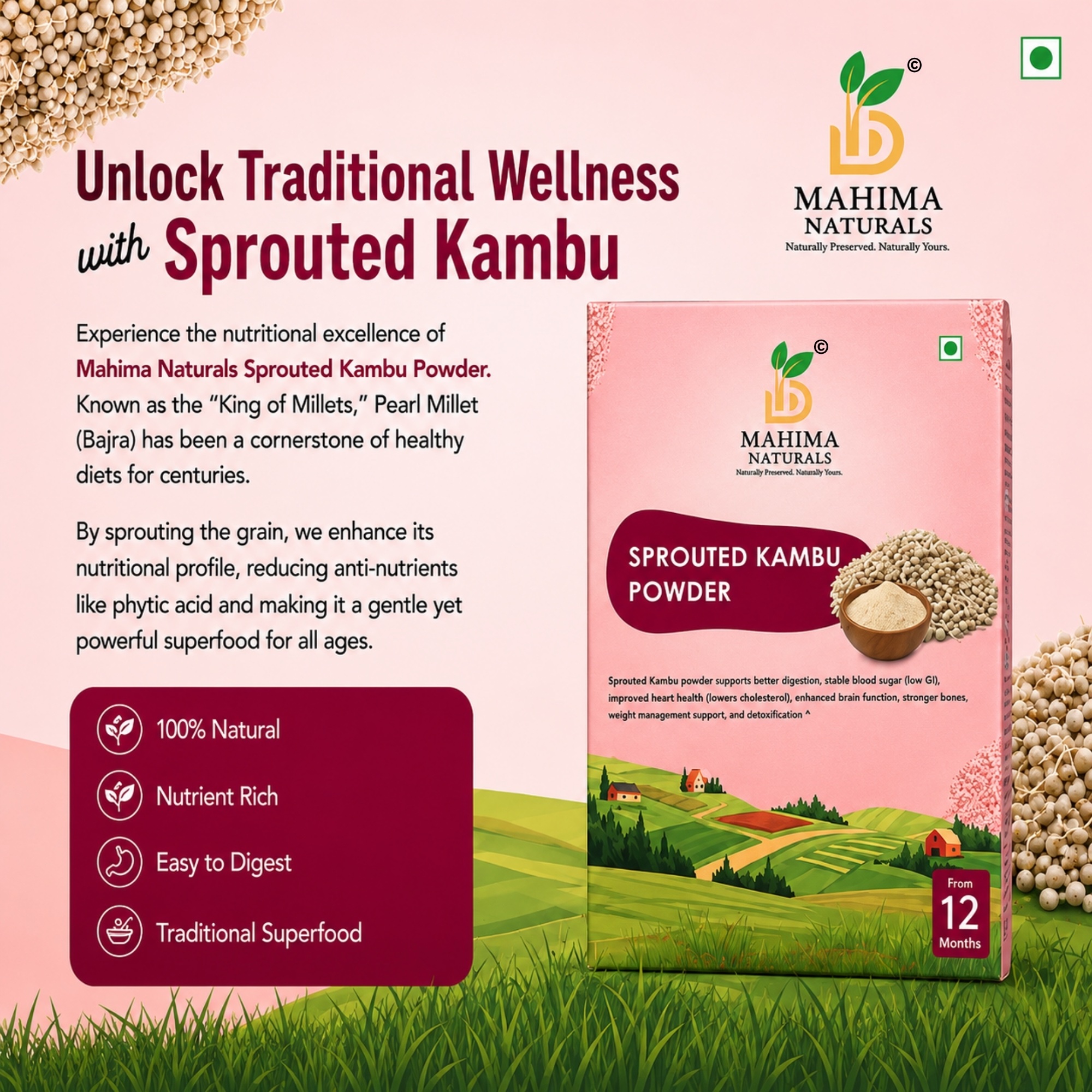
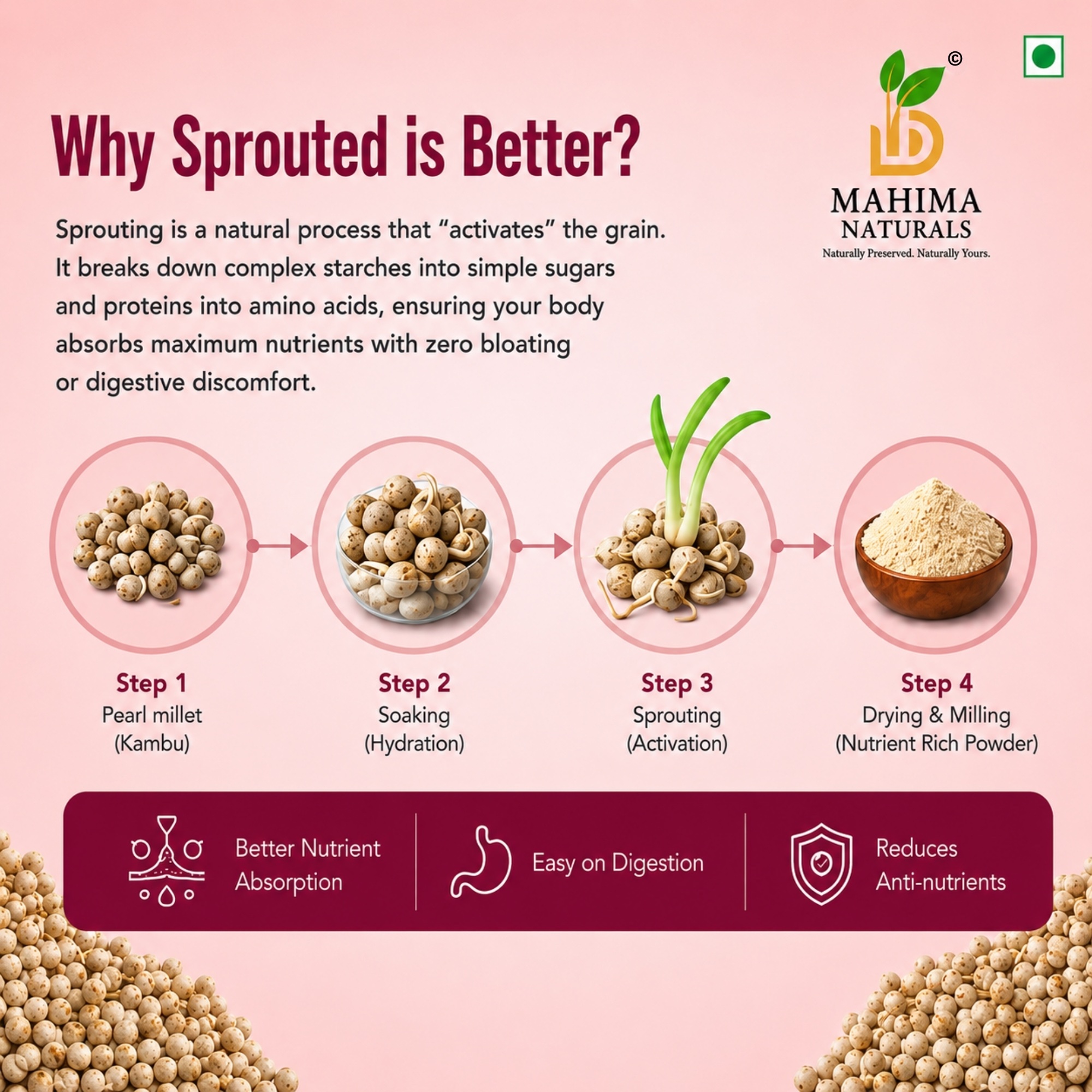
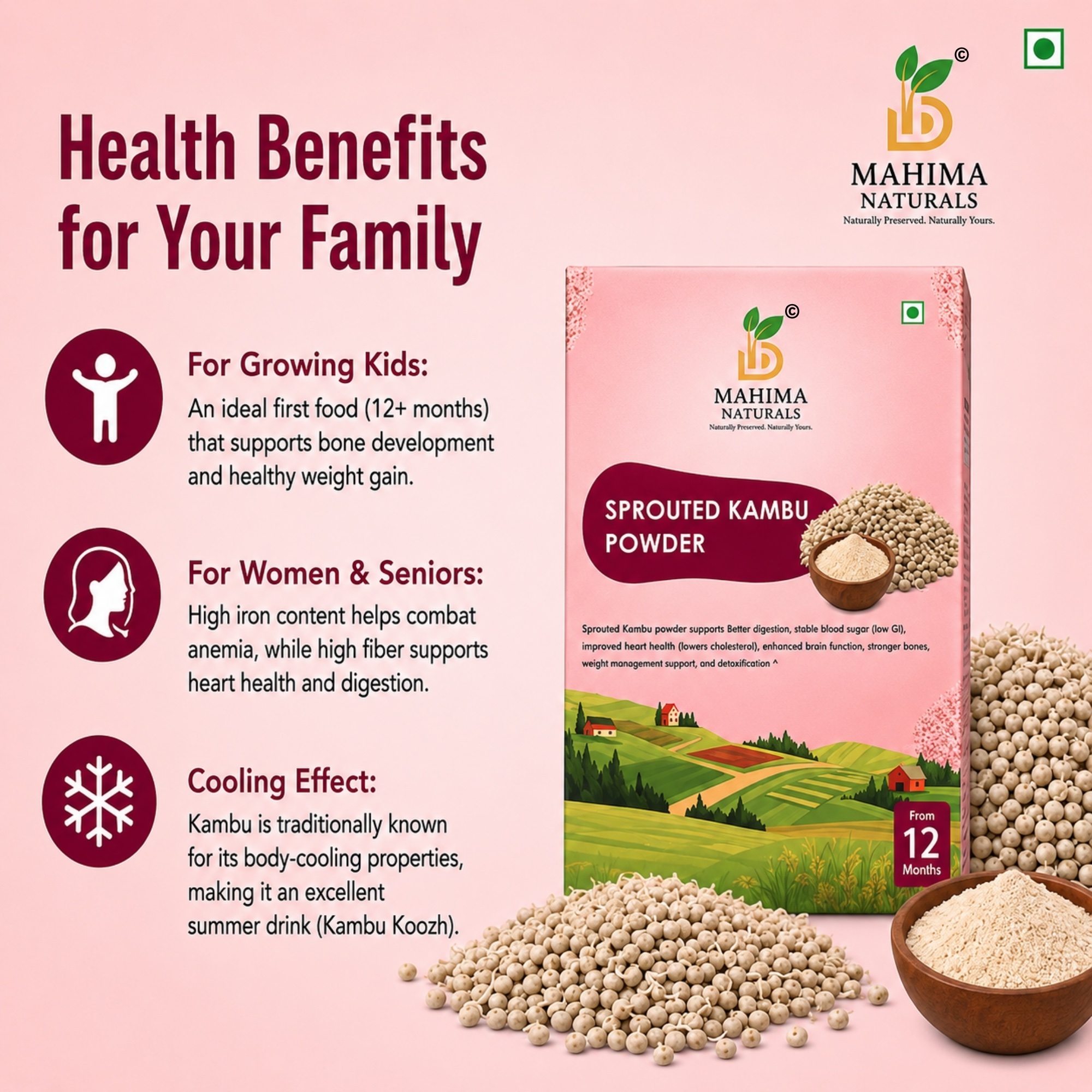
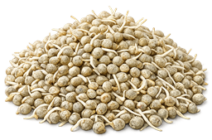
Sprouted Kambu (Pearl Millet) offers enhanced nutrition, easier digestion, and better nutrient absorption due to sprouting, boosting iron, B vitamins, and antioxidants while reducing anti-nutrients. Its benefits include improved gut health, better blood sugar control (low glycemic index), stronger immunity, heart health support (magnesium, potassium), and relief from acidity and body heat, making it excellent for all ages, particularly children, women, and diabetics.

We are crafting the best product with love

48 Hrs Sprout process

Most Advanced Dehydration Technology

Grinding and Sieving

Quality Check

Packaging and Storage

Delivery

This is the best, whoever takes it.
KIDS
1. Complex Carbohydrates (Starch, Maltodextrins formed during Sprouting) :  Provide sustained-release energy, supporting basal metabolic requirements, physical activity, and growth in children. 2.Dietary Fiber (Arabinoxylans, Beta-Glucans, Cellulose) : Contains soluble and insoluble fiber that improves gastrointestinal motility, enhances stool bulk, and supports healthy gut microbiota balance. 3.Potassium (K): Supports electrolyte balance, neuromuscular function, and normal muscle contraction during growth. 4.Magnesium (Mg) : Acts as a cofactor in enzymatic reactions involved in protein synthesis, nerve transmission, and energy metabolism. 5.Zinc (Zn): Supports immune function, cellular growth, and tissue development in children. 6.B-Complex Vitamins (Thiamine – Vitamin B1, Riboflavin – Vitamin B2, Niacin – Vitamin B3): Assist in carbohydrate metabolism, nervous system function, and energy production. 7.Iron (Fe): Supports hemoglobin synthesis and erythropoiesis; germination reduces phytate content, improving iron bioavailability for better absorption.

ADULTS

1. B-Complex Vitamins (Thiamine – B1, Riboflavin – B2, Niacin – B3) Assist in carbohydrate metabolism, nervous system function, and cellular energy production.
2.Magnesium (Mg): Acts as a cofactor in enzymatic reactions involved in glucose metabolism, muscle function, nerve transmission, and energy production.
3.Zinc (Zn): Supports immune function, protein synthesis, wound healing, and normal metabolic activity.
4.Phosphorus (P): Involved in adenosine triphosphate (ATP) synthesis, cellular energy metabolism, and maintenance of bone and tooth structure.
5.Iron (Fe): Supports hemoglobin synthesis and oxygen transport; germination reduces phytate content, improving mineral bioavailability.
6.Potassium (K): Maintains electrolyte balance, supports neuromuscular function, and contributes to regulation of blood pressure.
7.Gluten-Free Profile: Naturally gluten-free and suitable for adults with gluten intolerance or sensitive digestion.

ELDERS

1. Dietary Fiber (Arabinoxylans, Beta-Glucans, Cellulose) Supports gastrointestinal motility, improves bowel regularity, and helps manage age-related constipation by enhancing stool bulk.
2.Iron (Fe): Supports hemoglobin synthesis and oxygen transport; germination reduces phytate content, improving mineral bioavailability.
3.Magnesium (Mg): Acts as a cofactor in enzymatic reactions related to muscle relaxation, nerve transmission, and glucose metabolism, helping reduce muscle cramps.
4.Phosphorus (P): Supports adenosine triphosphate (ATP) synthesis, cellular energy metabolism, and maintenance of bone and tooth structure.
5.Potassium (K): Maintains electrolyte balance, supports neuromuscular function, and contributes to regulation of blood pressure and cardiovascular health.
6.Zinc (Zn): Supports immune response, wound healing, and cellular repair processes important during aging.
7.B-Complex Vitamins (Thiamine – B1, Riboflavin – B2, Niacin – B3): Assist in carbohydrate metabolism, nervous system function, and energy production.

WOMANS

1. Folate (Vitamin B9) Supports DNA synthesis, cell division, and red blood cell formation; important for women of reproductive age and maternal nutrition.
2.Magnesium (Mg) : Acts as a cofactor in enzymatic reactions related to muscle relaxation, nerve transmission, and energy metabolism; may help reduce menstrual-related muscle cramps.
3.Phosphorus (P): Involved in adenosine triphosphate (ATP) synthesis, cellular energy metabolism, and maintenance of bone and tooth structure.
4.Potassium (K): Supports electrolyte balance, neuromuscular function, and regulation of blood pressure.
5.Zinc (Zn): Supports immune function, wound healing, and normal hormonal activity.
6.B-Complex Vitamins (Thiamine – B1, Riboflavin – B2, Niacin – B3): Assist in carbohydrate metabolism, nervous system function, and cellular energy production.
7.Gluten-Free Profile: Naturally gluten-free and suitable for women with gluten sensitivity or digestive discomfort.
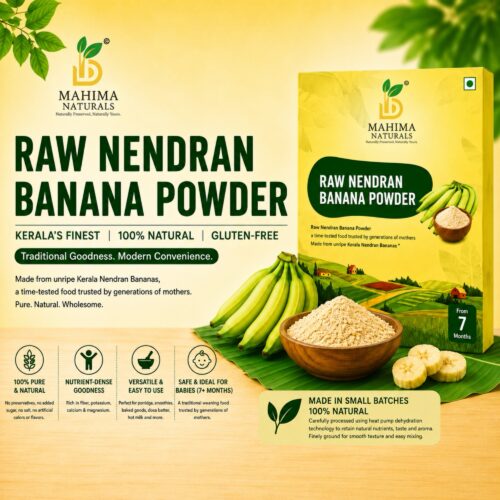
General Information
1. Always consult a paediatrician before adding any new food to your baby’s diet. This guidance is intended for general use and may not suit every child’s nutritional requirements.
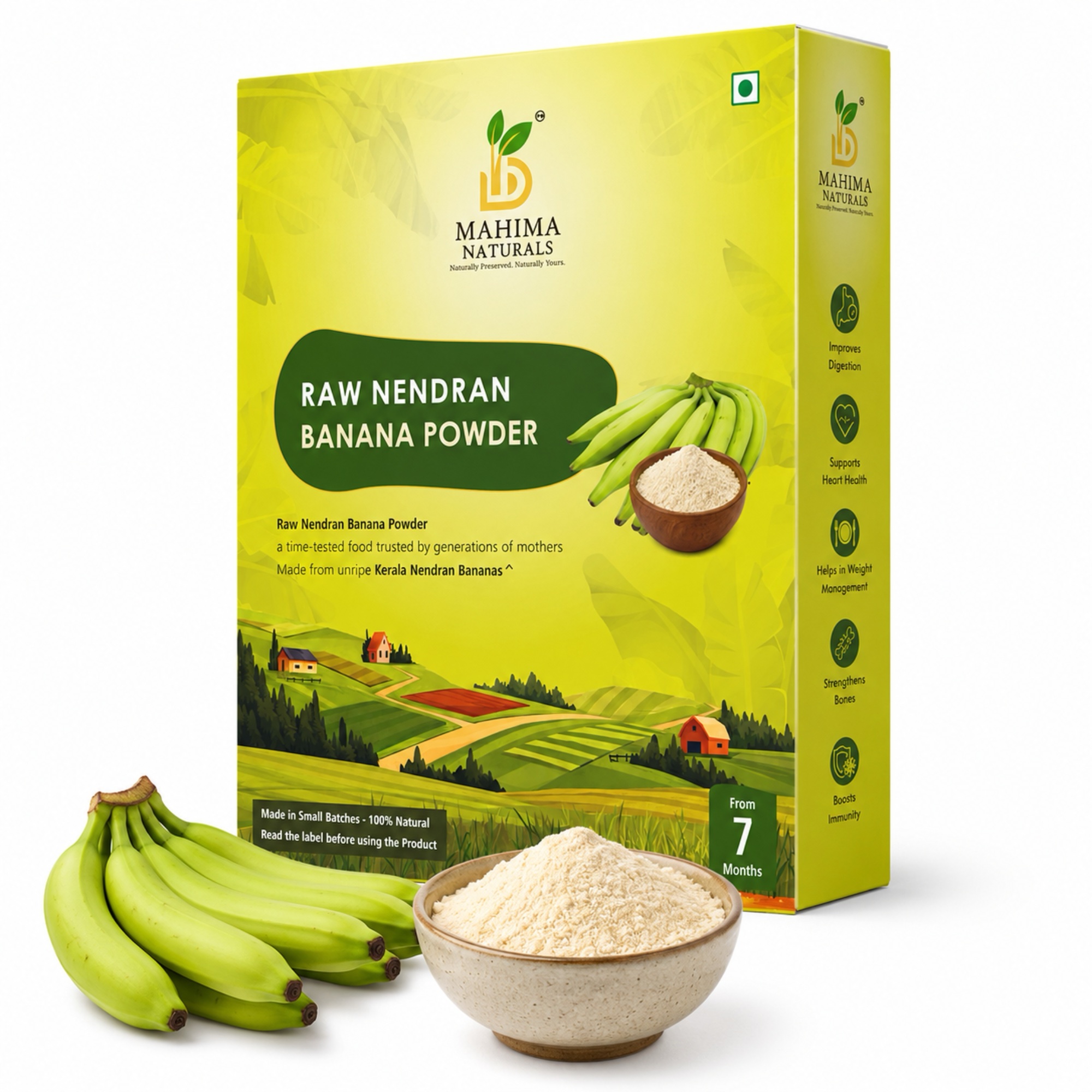
2. Introduce raw banana powder into your baby’s diet slowly, just as you would with any new food. Start with a small quantity and increase it gradually.
3. Ensure that all meals are prepared fresh each time.
4. Sterilize your baby’s utensils before using them to serve food.
5. To keep raw banana powder fresh, store it in an airtight container in a cool, dry area away from direct sunlight.
6. At what age should a baby begin eating solid foods? To learn more, see this UNICEF article (Link: https://www.unicef.org/parenting/food-nutrition/feeding-your-baby-when-to-start-solid-foods).

What is the method for preparing raw banana powder porridge for infants?
1. Wash your hands thoroughly before preparing the food.
2. Boil drinking water for 5 minutes to make sure it is safe.
3. Place 2 tablespoons of raw banana powder in a pan.
4. Cook over medium heat for 4 to 5 minutes, stirring constantly to prevent lumps.
5. Optionally, add palm jaggery or palm candy powder for flavour.
6. Let it cool to room temperature and serve immediately.

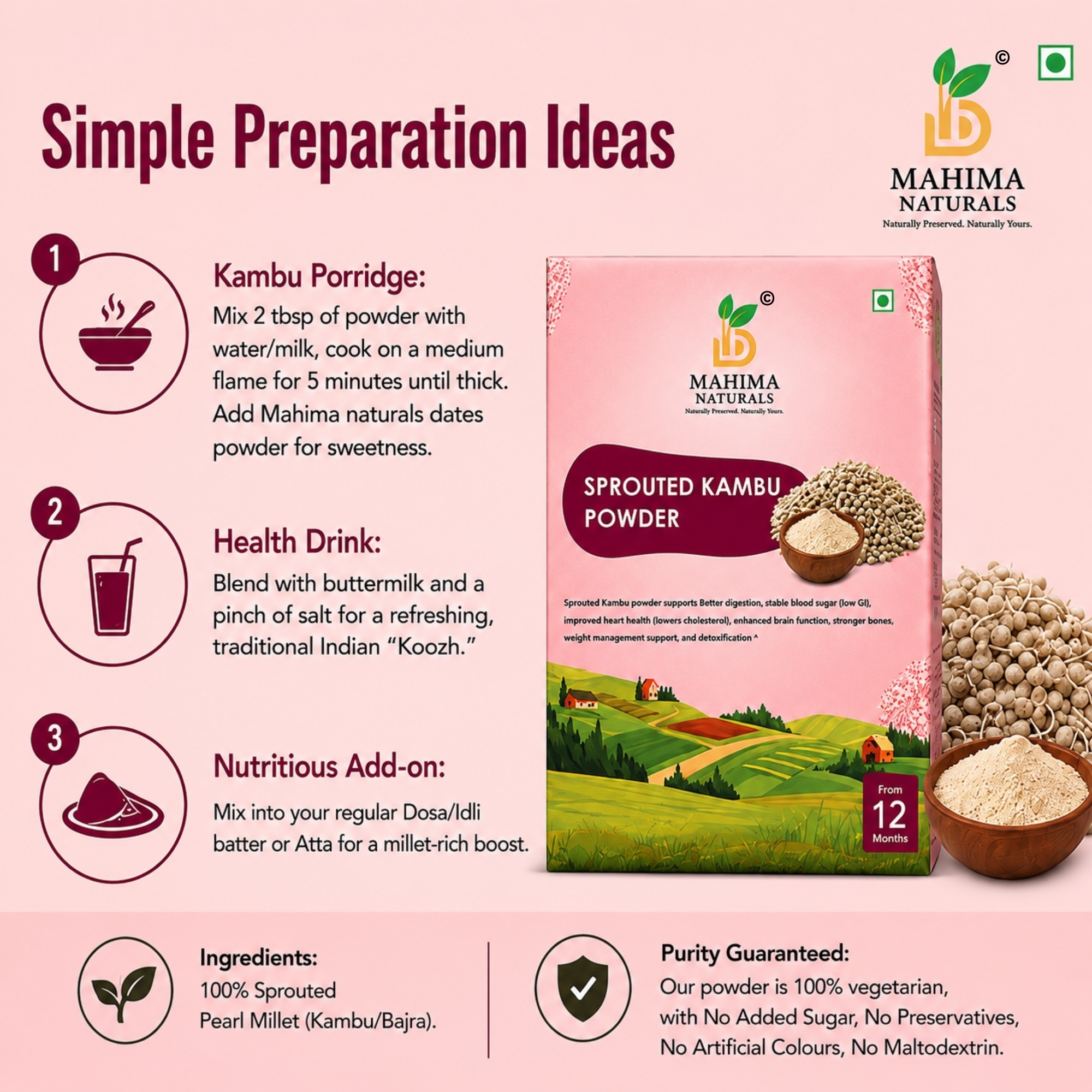
Milk: To use milk with sprouted pearl millet (Kambu) powder, first mix 2–3 tablespoons of the powder with a little water or cold milk to create a smooth, lump-free slurry. In a saucepan, bring 1 cup of milk (or a milk-water mix) to a gentle boil, then slowly whisk in the slurry while stirring continuously to prevent sticking. Simmer the mixture on low heat for 5–7 minutes until it thickens into a creamy porridge or a smooth “malt” drink. Finally, remove from heat and sweeten with jaggery, honey, or a pinch of cardamom for a nutritious, energy-boosting beverage.

Breakfast Cereals: To make a nutritious breakfast cereal using sprouted pearl millet (kambu) powder, whisk ¼ cup of the powder into 1 cup of water or milk until smooth, then cook the mixture over medium heat for 5–7 minutes until it thickens into a porridge-like consistency. For a “hot cereal” texture, stir in a handful of rolled oats or puffed millets during the last two minutes of cooking to add bulk and crunch. Once thickened, transfer to a bowl and top with fresh fruits, toasted nuts, and a drizzle of honey or maple syrup to complete the meal.

Sweets: To make a healthy sweet like Kambu Halwa or Ladoo, heat 2 tablespoons of ghee in a pan and roast 1 cup of sprouted pearl millet powder on low heat until it turns aromatic and slightly darker. Gradually whisk in 2 cups of warm milk or water to prevent lumps, stirring continuously until the mixture thickens into a solid mass. Add ½ cup of jaggery powder or palm sugar along with a pinch of cardamom and a bit more ghee, cooking until the mixture starts to leave the sides of the pan. Finally, garnish with roasted cashews and either serve it warm as halwa or allow it to cool slightly to roll into nutritious, bite-sized sweet ladoos.

Cakes: To bake a nutritious cake using sprouted pearl millet (kambu) powder, replace up to 50% of the regular flour in your favorite recipe with the millet powder for a nutty, earthy flavor and enhanced nutrition. Whisk 3 eggs with ¾ cup brown sugar until fluffy, then fold in a mixture of 1 cup sprouted kambu powder, 1 teaspoon baking powder, and a pinch of cinnamon. Gradually add ½ cup melted butter or oil and ¼ cup milk to create a smooth batter, being careful not to overmix. Pour the batter into a greased pan and bake at 350°F (175°C) for 30–35 minutes until a toothpick comes out clean, resulting in a moist, fiber-rich cake perfect for a healthy treat.

Pancakes: To make healthy sprouted pearl millet (kambu) pancakes, whisk together ½ cup sprouted pearl millet powder, ½ cup whole wheat flour, 1 teaspoon baking powder, and a pinch of salt. In a separate bowl, mix 1 egg, ¾ cup milk, and 1 tablespoon of honey or jaggery syrup, then combine the wet and dry ingredients into a smooth batter. Because millet powder is dense, let the batter rest for 5 minutes to ensure a soft texture, then pour small circles onto a greased, medium-heat griddle. Cook until bubbles appear on the surface, flip, and brown the other side for a fiber-rich, nutritious breakfast.

Idly : To make nutritious sprouted pearl millet (kambu) idlis, whisk ½ cup of sprouted pearl millet powder into 1 cup of your standard fermented idli batter and mix thoroughly. Add a small splash of water if the batter becomes too thick, as millet powder absorbs more liquid than rice, and add a pinch of salt if needed. Pour the fortified batter into greased idli molds and steam for 10–12 minutes until the idlis are soft and a toothpick comes out clean. This method adds a nutty flavor and significant fiber to your breakfast while maintaining a light, fluffy texture.

Dosa: To make sprouted pearl millet (kambu) dosa, whisk ½ cup of sprouted pearl millet powder into 1 cup of fermented dosa batter and stir until smooth and lump-free. Because the sprouted powder is highly absorbent, add a small amount of water to maintain a thin, pourable consistency that spreads easily. For a more flavorful crust, add a pinch of cumin and finely chopped curry leaves. Heat a non-stick tawa, spread a ladle of batter in a thin circular motion, and drizzle with ghee or sesame oil, cooking on medium heat until the edges turn crispy and golden-brown.

Customer Reviews

Based on 9 reviews
  1. Suganya

    I recently introduced sprouted kambu powder to my family’s breakfast routine. It’s light on digestion and keeps us energetic throughout the morning.

  2. Harish

    Good quality and hygienic packaging. The sprouting process clearly enhances the flavor and nutrition.

  3. Gopinath

    Very satisfied with the product. It feels wholesome, nutritious, and ideal for both children and adults.

  4. Anand B

    Very satisfied with the consistency and taste.

  5. Lokesh R

    High-quality product with hygienic packaging. The sprouted version feels more nutritious and easy to digest.

  6. Preethi

    I prefer traditional millet-based foods, and this sprouted kambu powder meets my expectations.

  7. Sarath

    Good quality sprouted kambu powder with hygienic packaging. The consistency is perfect when prepared as porridge.

  8. Meenakshi

    I prefer traditional millet foods, and this sprouted kambu powder is excellent.

  9. Naveenkumar

    Very satisfied with the product quality.