

Description

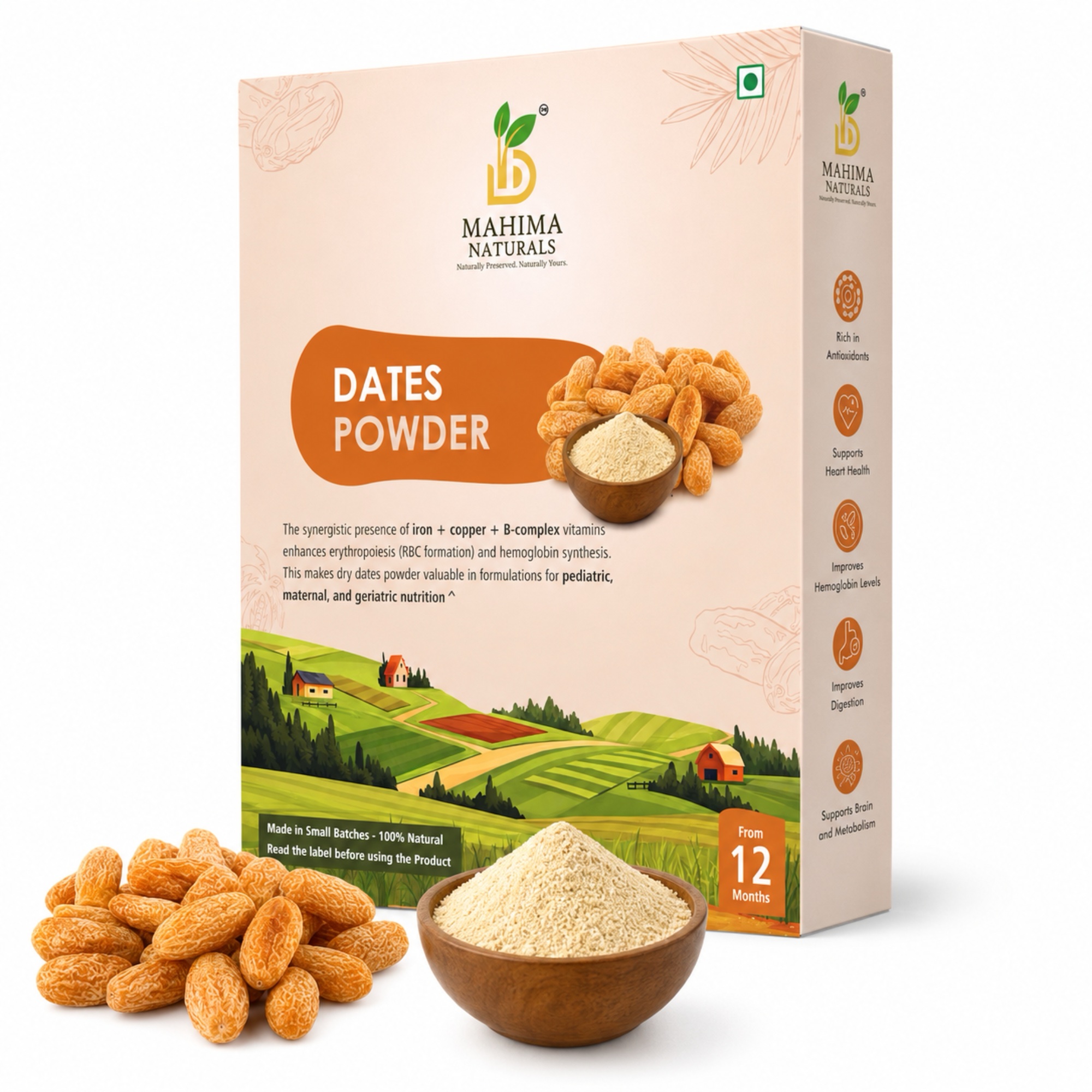
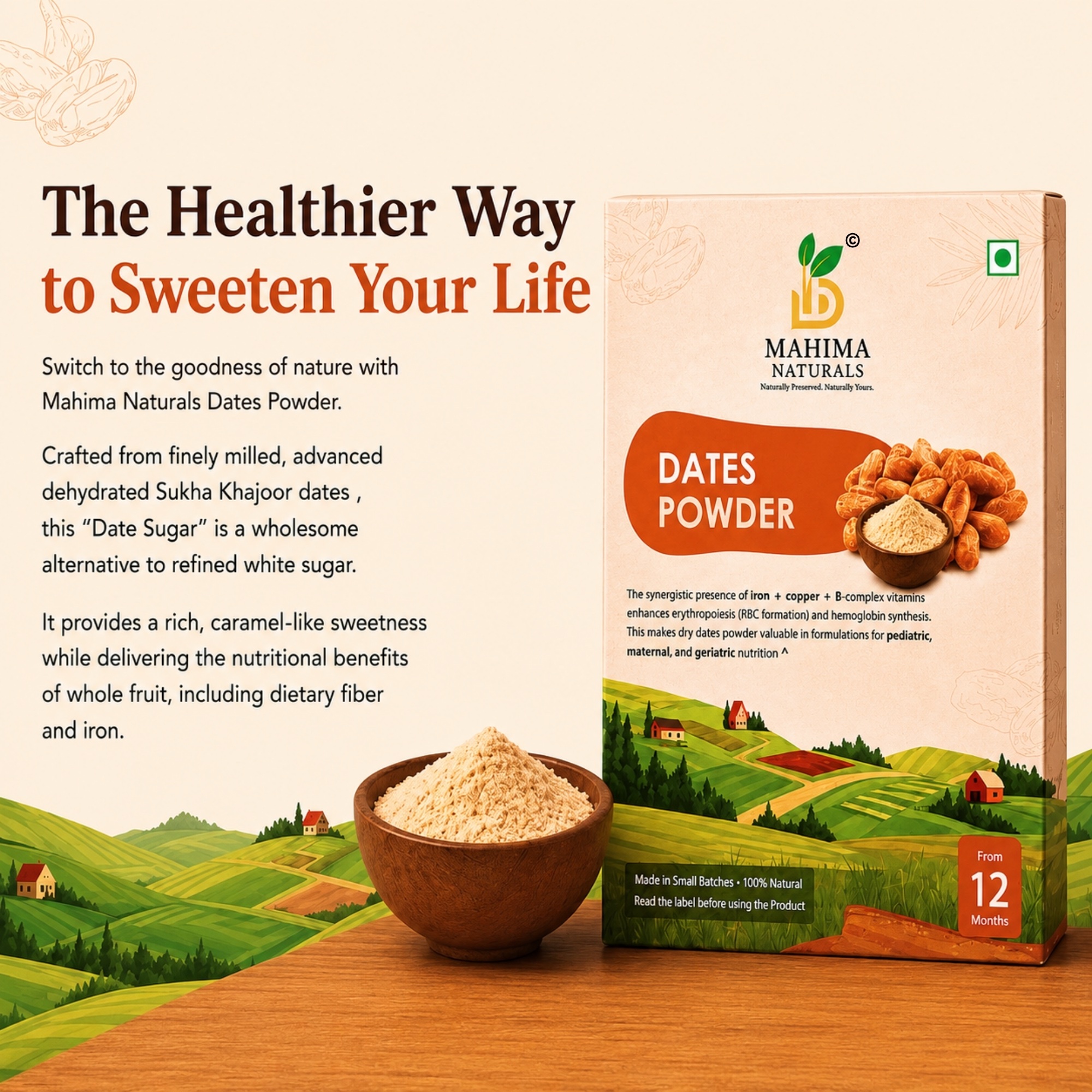
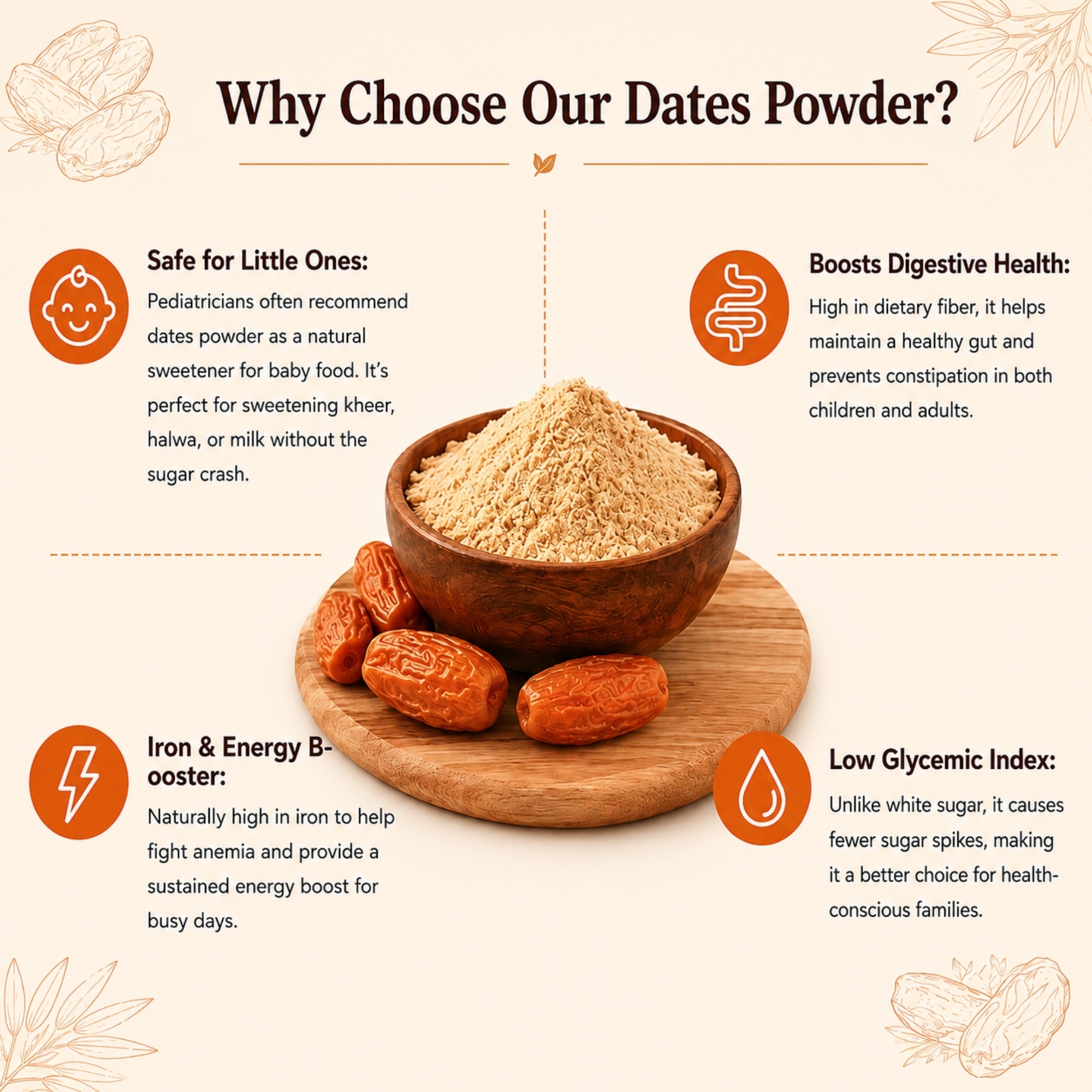
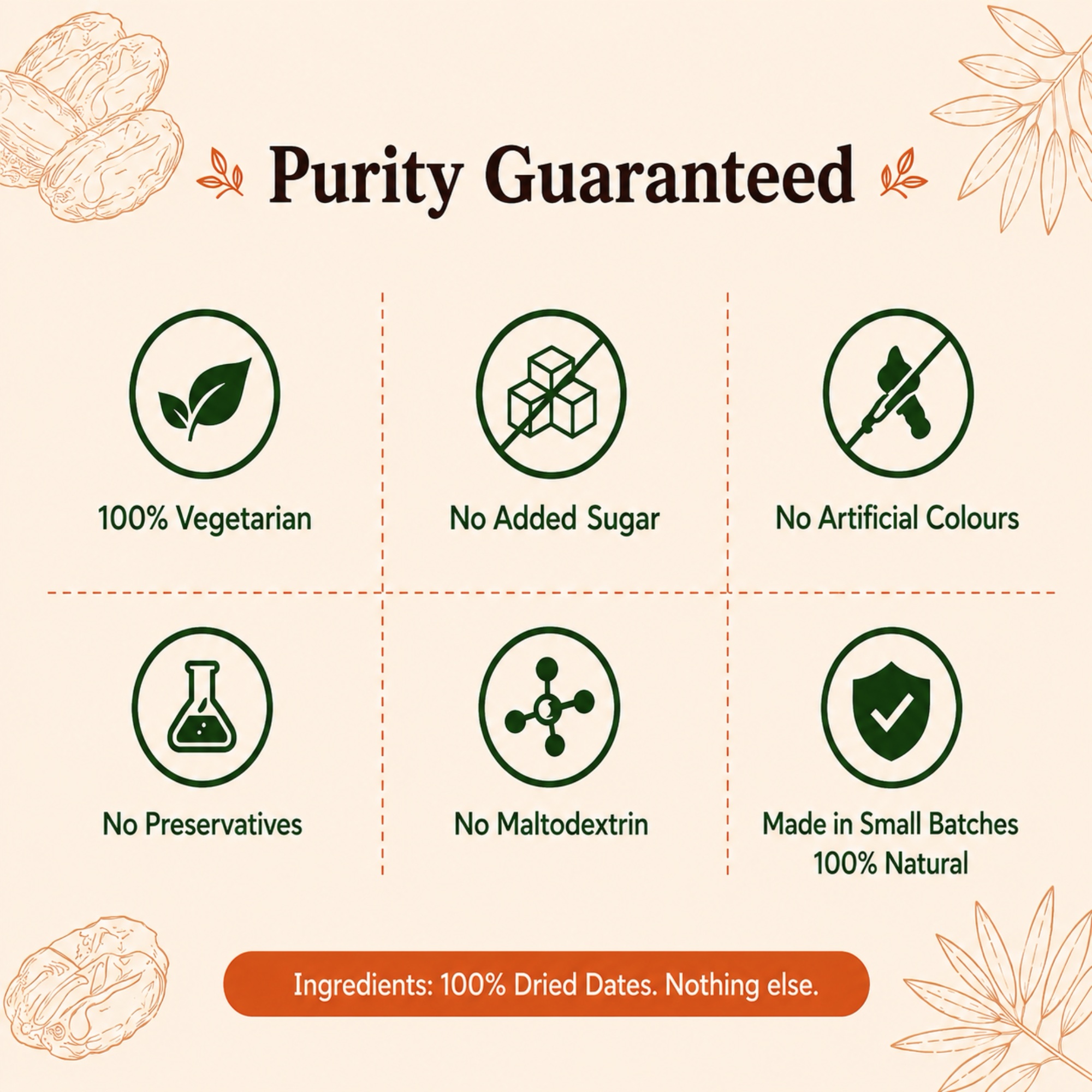
Dates powder is a natural sweetener and nutrient-rich food made from carefully dried and finely ground dates, preserving their inherent vitamins, minerals, and bioactive compounds. It is an excellent source of natural carbohydrates that provide instant and sustained energy, making it especially beneficial for children, athletes, and individuals with high energy requirements. Unlike refined sugar, dates powder delivers sweetness along with essential nutrients, making it a healthier alternative for daily use.

We are crafting the best product with love

Selection, Cleaning and Sorting

Peeling and Slicing

Most Advanced Dehydration Technology

Grinding and Sieving

Quality Check

Packaging and Storage

Delivery

This is the best, whoever takes it.

KIDS

1. Carbohydrates (Glucose, Fructose, Sucrose):Provides naturally occurring simple sugars that act as a rapid and efficient energy source, supporting physical activity, brain function, and growth requirements in children.
2. Dietary Fiber (Soluble Fiber, Insoluble Fiber):Contains soluble and insoluble dietary fiber that supports gastrointestinal motility, improves stool bulk, and helps maintain healthy digestive function.
3. Potassium (K):Supports electrolyte balance, neuromuscular function, and normal muscle contraction, essential for growing children.
4. Magnesium (Mg): Acts as a cofactor in enzymatic reactions involved in energy metabolism, protein synthesis, and neuromuscular coordination.
5. Calcium (Ca): Contributes to bone mineralization and supports healthy skeletal and dental development.
6. Vitamin B6 (Pyridoxine): Involved in amino acid metabolism, neurotransmitter synthesis, and cognitive development.
7.Iron (Fe): Supports hemoglobin synthesis and erythropoiesis, facilitating oxygen transport and helping reduce the risk of iron-deficiency anemia.

ADULTS

1. Potassium (K) Plays a key role in electrolyte balance, neuromuscular transmission, and regulation of blood pressure, supporting cardiovascular health.
2. Magnesium (Mg) Functions as a cofactor for numerous enzymatic reactions involved in energy production, muscle relaxation, nerve function, and glucose metabolism.
3. Calcium (Ca) Contributes to maintenance of bone mineral density and supports normal muscle contraction and nerve signaling.
4. Phosphorus (P) Involved in adenosine triphosphate (ATP) synthesis, cellular energy metabolism, and maintenance of bone and tooth structure.
5. Iron (Fe) Supports hemoglobin synthesis and oxygen transport, helping reduce fatigue associated with iron deficiency.
6. Vitamin B6 (Pyridoxine)
Participates in amino acid metabolism, neurotransmitter synthesis, and regulation of homocysteine levels.
7.Zinc (Zn) Supports immune function, protein synthesis, wound healing, and normal metabolic activity.

ELDERS

1. Carbohydrates (Glucose, Fructose, Sucrose) Provide readily absorbable sugars that supply quick energy, helping reduce fatigue and support daily metabolic needs in elders.
2. Dietary Fiber (Soluble Fiber, Insoluble Fiber) Supports gastrointestinal motility, improves bowel regularity, and helps manage age-related constipation by enhancing stool bulk.
3. Polyphenols and Flavonoids Provide antioxidant activity, helping reduce oxidative stress associated with aging and chronic conditions.
4. Low Fat and Cholesterol-Free Profile Naturally low in fat and free from cholesterol, supporting heart-healthy dietary patterns for elders.
5. Easily Digestible Energy Source Soft carbohydrate profile makes dates powder suitable for elders with reduced chewing ability or decreased digestive efficiency.
6. Iron (Fe)
Supports hemoglobin synthesis and oxygen transport, helping reduce fatigue and anemia commonly observed in elderly individuals.
7. Calcium (Ca)
Contributes to maintenance of bone mineral density and supports skeletal strength, important in reducing osteoporosis risk.

WOMANS

1. Iron (Fe) Supports hemoglobin synthesis and erythropoiesis, helping compensate for iron losses during menstruation and reducing the risk of iron-deficiency anemia.
2. Potassium (K) Maintains electrolyte balance, supports neuromuscular function, and contributes to normal blood pressure regulation.
3. Magnesium (Mg) Acts as a cofactor in enzymatic reactions involved in energy metabolism, muscle relaxation, nerve function, and may help reduce menstrual-related cramps.
4. Calcium (Ca)  Contributes to bone mineral density and supports skeletal health, particularly important for women to reduce long-term osteoporosis risk.
5. Vitamin B6 (Pyridoxine)  Involved in amino acid metabolism, neurotransmitter synthesis, and hormonal regulation, supporting mood and metabolic balance.
6.Low Fat and Cholesterol-Free Naturally low in fat and free from cholesterol, supporting heart-healthy dietary patterns.
7.Zinc (Zn) Supports immune function, wound healing, and normal reproductive and hormonal activity.
General Information
1. Always consult a paediatrician before adding any new food to your baby’s diet. This guidance is intended for general use and may not suit every child’s nutritional requirements.
2. Introduce raw banana powder into your baby’s diet slowly, just as you would with any new food. Start with a small quantity and increase it gradually.
3. Ensure that all meals are prepared fresh each time.
4. Sterilize your baby’s utensils before using them to serve food.
5. To keep raw banana powder fresh, store it in an airtight container in a cool, dry area away from direct sunlight.
6. At what age should a baby begin eating solid foods? To learn more, see this UNICEF article (Link: https://www.unicef.org/parenting/food-nutrition/feeding-your-baby-when-to-start-solid-foods).

What is the method for preparing raw banana powder porridge for infants?
1. Wash your hands thoroughly before preparing the food.
2. Boil drinking water for 5 minutes to make sure it is safe.
3. Place 2 tablespoons of raw banana powder in a pan.
4. Cook over medium heat for 4 to 5 minutes, stirring constantly to prevent lumps.
5. Optionally, add palm jaggery or palm candy powder for flavour.
6. Let it cool to room temperature and serve immediately.

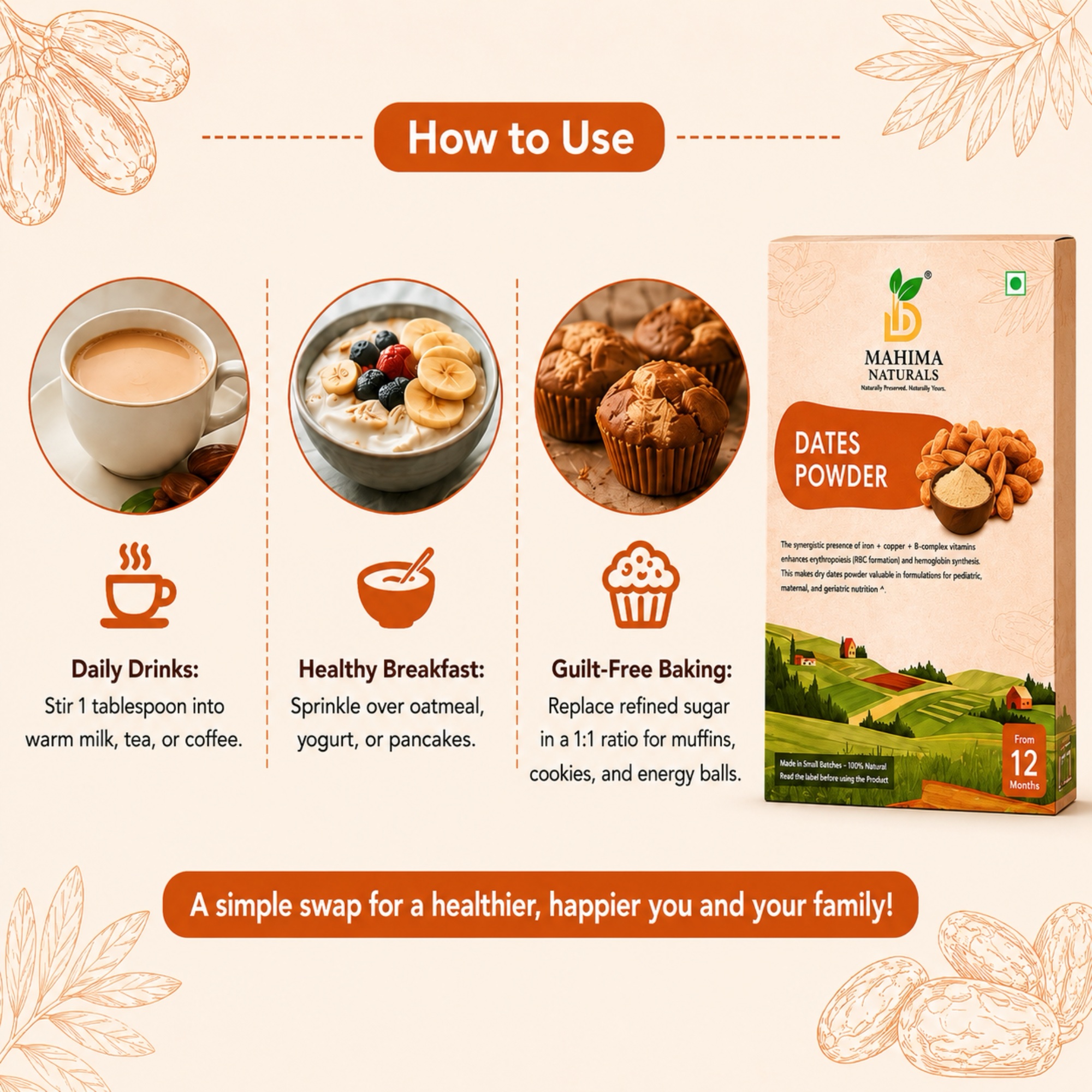
Milk: To use date powder in milk, simply stir 1–2 teaspoons into a glass of warm milk until well combined; no boiling is necessary after adding the powder. For a cold beverage or a smoother texture, blend the powder with chilled milk and optional ice cubes to create a creamy date milkshake. Since date powder is made from whole ground dates, it provides a natural, caramel-like sweetness along with essential fiber, iron, and calcium, though some fine particles may settle at the bottom if not continuously stirred.

Breakfast cereals: Date powder, a nutrient-dense and high-fiber alternative to refined sugar, can be easily incorporated into your breakfast cereal by stirring or sprinkling it directly into the bowl. For hot cereals like oatmeal or porridge, add 1–2 tablespoons while cooking or while the dish is still warm to allow the powder to soften and release its rich, caramel-like flavor. In cold cereals, muesli, or granola, sprinkle a spoonful on top just before adding milk; while it does not fully dissolve in cold liquids like processed sugar, it remains suspended and provides a subtle, natural sweetness. Beyond direct toppings, you can also mix it into overnight oats or use it as a binder in homemade breakfast bars to provide a sustained energy boost rich in iron and potassium.

Sweets: Date powder serves as a nutrient-dense 1:1 sugar substitute that brings a rich, caramel-like flavor to various desserts. For no-bake treats like laddoos or energy balls, mix it with nuts and ghee to act as both a sweetener and a natural binder. In baking, it works well in cakes, cookies, and brownies, though you may need to slightly increase the liquid ingredients since the powder’s fiber content absorbs moisture. You can also stir it into puddings, kheer, or custards to thicken the texture while adding a healthy dose of iron and potassium without the blood-sugar spikes of refined sugar.

Pancakes: To use date powder in pancakes, whisk it directly into your dry ingredients before adding the liquids to ensure it distributes evenly throughout the batter. You can substitute white or brown sugar with date powder at a 1:1 ratio, though because the fiber in the powder absorbs more moisture, you should slightly increase the wet ingredients (like milk or water) or decrease the other dry ingredients by about 25% to maintain a fluffy texture. For a deeper flavor, you can also mix the powder with a small amount of warm water to create a quick paste before stirring it into the wet mixture. Be sure to cook the pancakes over medium-low heat, as the natural sugars in date powder can caramelize and brown faster than refined sugar.

Cakes: To use date powder in cakes, whisk it into your dry ingredients as a direct 1:1 replacement for granulated sugar to infuse the sponge with a rich, toffee-like flavor. Since the high fiber content in date powder absorbs more liquid, it is  recommend increasing the wet ingredients—such as milk, oil, or eggs—by about 10–15% or reducing the flour slightly to prevent the cake from becoming dry. For the smoothest texture, you can also blend the powder into your liquid base first to ensure even distribution. Because the natural sugars in date powder caramelize quickly, it is best to bake your cake at a slightly lower temperature for a few extra minutes to prevent the exterior from over-browning before the center is done.

Customer Reviews

Based on 5 reviews
  1. Rekha S

    I started using dates powder as a natural sweetener for my child’s porridge. It tastes great and feels much healthier than regular sugar

  2. Praveen

    The quality is excellent and the powder has a rich natural aroma. Perfect for adding natural sweetness to milk and cereals

  3. Nisha R

    I love that this dates powder is completely natural. I use it in my baby’s food and it blends smoothly.

  4. Ganesan

    Very good product with a fine texture. It mixes easily in warm milk and gives a pleasant taste.

  5. Karthik B

    Fresh quality and hygienic packaging. The natural sweetness of dates makes drinks and porridge much better.